Tuesday, September 2, 2025

Book Tour ~ Sins of the Father - A Nathan Parker Detective Novel by James L'Etoile


Sins of the Father by James L'Etoile Banner

SINS OF THE FATHER

by James L'Etoile

August 4 - 29, 2025 Virtual Book Tour

Synopsis:

 Sins of the Father by James L'Etoile

THE NATHAN PARKER DETECTIVE NOVEL SERIES


Detective Nathan Parker discovers an unidentified man tossed to his death from an airplane is connected to the emergence of a new criminal organization, Red Dawn, when a secretive Joint Terrorism Task Force appears in Phoenix. The leader of the Task Force coerces Parker to support their efforts or his ex-coyote friend, Billie Carson, could face federal charges for supporting a terrorist organization. With Billie’s freedom in jeopardy, Parker agrees and one-by-one, people associated with the Task Force are picked off. When a target close to Parker is attacked, and the Task Force leader vanishes, Parker seeks help from an unusual ally to expose Red Dawn's mastermind. Familiar foes, lies, secrets, and a father’s sin converge in a deadly standoff.

Book Details:

Genre: Thriller; Police Procedural
Published by: Level Best Books
Publication Date: July 15, 2025
Number of Pages: 320
ISBN: 978-1-68512-992-7
Series: The Detective Nathan Parker Novels, Book 4
Book Links: Amazon | Goodreads
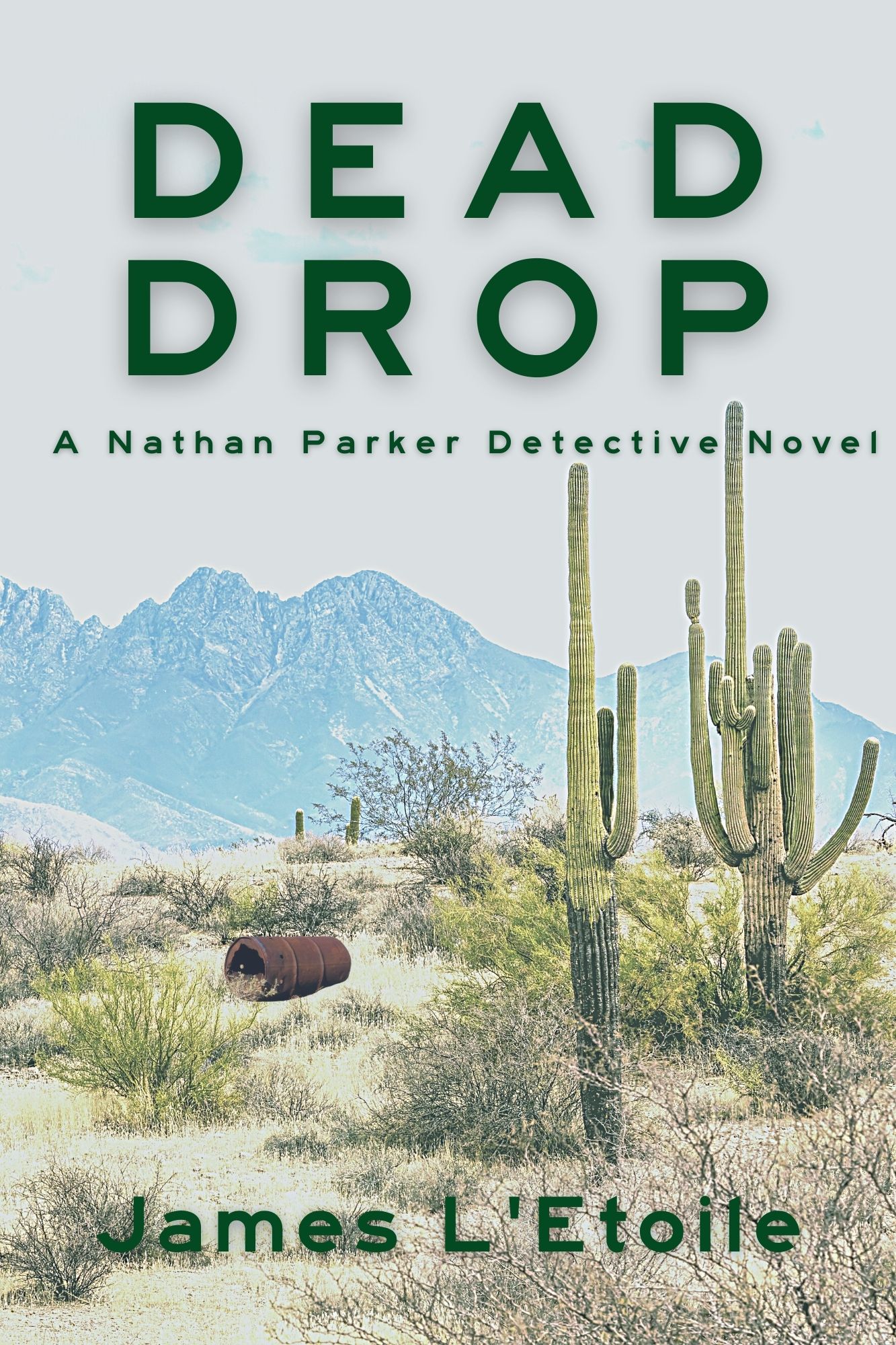
Dead Drop by James L'Etoile
Amazon | BookBub | Goodreads
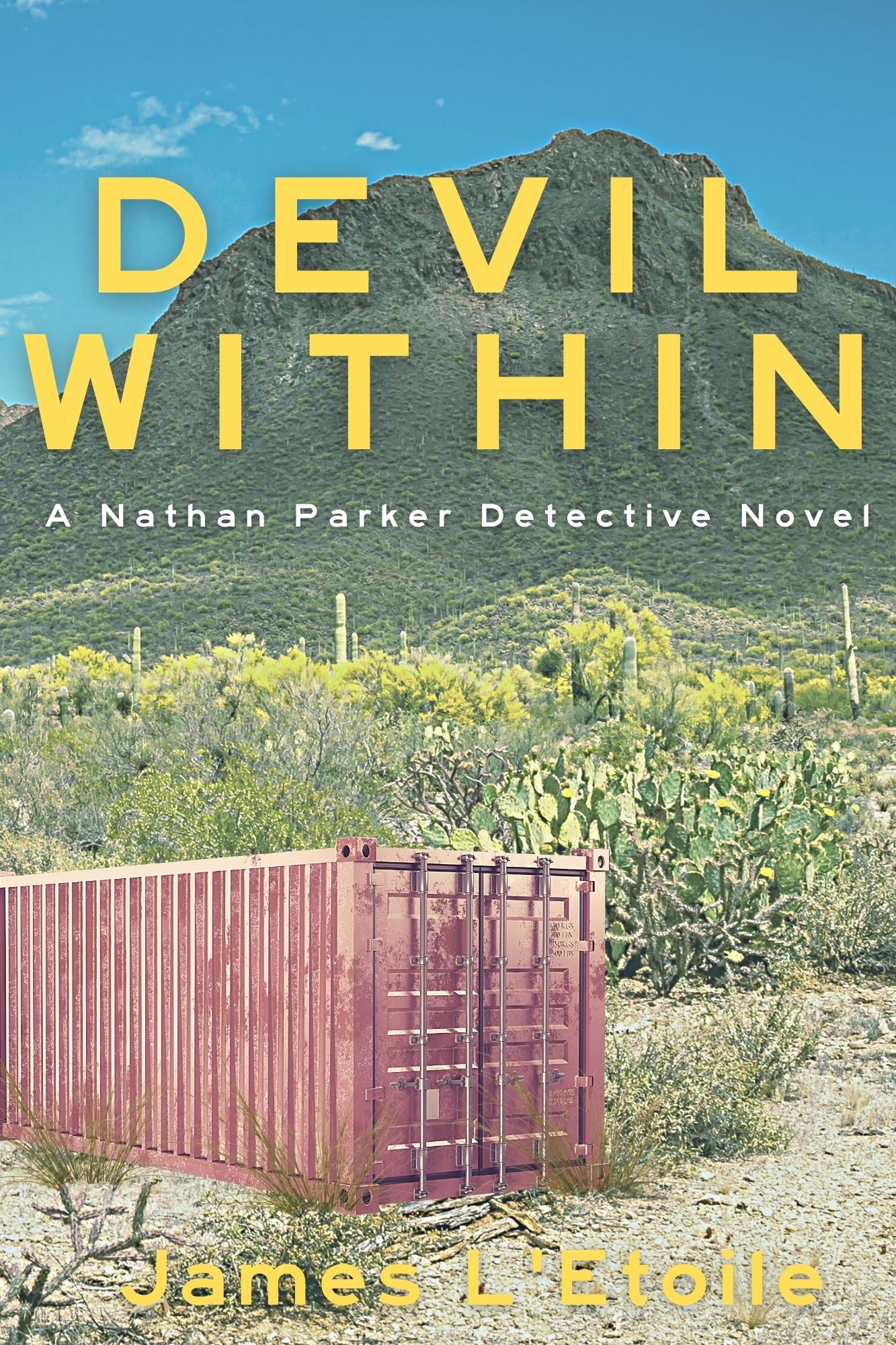
Devil Within by James L'Etoile
Amazon | BookBub | Goodreads
Served Cold by James L'Etoile
Amazon | BookBub | Goodreads

Read an excerpt:

Chapter One

Death to a ten-year-old is a pause in a video game. It’s temporary. A momentary setback until you’re back into the game again. At their age, the boys of Boy Scout Troop 116 thought they were immortal. Or they did until they got their first glimpse of human remains.

Ken Dryden stood on the brakes, sending the fifteen-passenger van into a skid on the hard-packed desert road. A flock of eight turkey vultures pecked and tore hunks of flesh from their prey. The enormous birds didn’t budge at the approach of the speeding white passenger van. Only one bothered to look up with a flap of meat hanging from its curved beak.

The birds ignored a loud burst from the van’s horn. Dryden unbuckled and turned to the eight boys in the back. “Stay here.”

Dryden and the assistant scoutmaster, Bill Cope stepped from the van and approached the circle of birds.

“Must’ve found themselves a coyote or something,” Cope said. “Why you insist we take this road? It’s in the middle of—”

“This can’t be…” Dryden trailed off and crept toward the flock of scavengers.

“Whatever they found, they sure don’t want to give it up,” Dryden said as he waved his arms trying to chase the birds off the road.”

“Don’t blame them. Pickings are probably a bit thin out here.”

From behind, a high-pitched voice called out. “Oh, cool. What did they kill?”

Dryden turned and three ten-year-old boys stood a few feet away gawking at the feeding frenzy on the hardscrabble dirt road.

“I told you guys to wait in the van.”

“What did they find?” The tallest boy asked.

“Probably a coyote or something run over on the road, Chase.”

“There’s no tracks in the dirt but ours,” Chase said.

The birds fought and squawked at one another, tearing bits of flesh out from the beaks of weaker birds in the flock. Wings flared and cupped over the remains, claiming them.

“Mr. Dryden? What’s that?” Chase asked.

“What?”

“That,” the boy said with a trembling finger, pointing toward the largest vulture with a torn hunk of flesh hanging from its red beak.

Dryden followed the boy’s line of sight and under the bird’s talons were the remains. He felt sick when he saw it. A brown work boot. Coyotes didn’t wear boots.

“Oh my God.”

“Is it a dead person? Chase said.

“Back to the van boys,” Cope said.

“But—”

“Now!” Dryden barked the order, and the three scouts scurried back to the van.

“Why did you take us on this back road to begin with? What do we do now?” Cope asked Dryden. The two adult supervisors of this scout troop stood at the desert crossroads.

Cope pulled out his cell phone. “No signal out here. We need to call 911.”

Dryden looked back to the van and all eight boys pressed up against the windows gawking at the human remains as the carrion birds devoured their treasure.

“We gotta get them outta here,” Dryden said.

He charged the birds, and most of them backed away. Dryden got a good look at what lay in the desert crossroads—a man, twisted, mangled, and broken. Huge swaths of flesh torn away by the feeding birds. Dryden’s shoulders drooped at the sight—a dead man left in the crossroads.

“I’ll try and keep them away. Drive the boys back out to Quartzite. Call 911. I’ll wait.”

“You wanna stay out here? In this heat?” Cope said.

“It’s early, the heat won’t top out for a couple of hours. I’ll take my pack and all the water we can spare. I’ll be fine. There’s a little shade over there under that Palo Verde.”

Tall, dry creosote brush and a few taller gangly green Palo Verde trees and Saguaro cactus lined the crossroads

“You sure? It’s not like you can help that guy?”

“Whoever he is, he doesn’t deserve to get eaten by these feathered desert rats either. How would you feel if it was someone you knew?”

Dryden retrieved his day pack and two canteens from the van.

“Guys, Mr. Cope is going to take you out. He’ll stop in Quartzite for a pee break.”

“I’ll stay with you, Mr. Dryden,” Chase said.

“Everyone’s going with Mr. Cope.”

A sigh of disappointment filled the back of the van. Dryden knew Chase’s mother was going to meltdown over her precious offspring’s exposure to the dark fringes of life. He figured the Scottsdale socialite would spirit her son away to a resort in Sedona for a crystal bath and chakra realignment.

Dryden hefted his pack and slung the canteens over his shoulder while the van cut a three-point turn and returned in the direction they came.

Once the dust and engine noise died down, all that remained was the breeze cutting through the dried brush and the cackling of the vultures fighting over their prize.

Setting his pack down, Dryden broke off a creosote branch and swung it in front of him forcing the birds away from the remains. Reluctantly, the birds gave up and hopped to the other side of the crossroads.

Dryden closed in on the dead man and grimaced at the mess the vultures made. Unrecognizable. Legs twisted and folded under the body, with a boot sticking out at an impossible angle. No way Chase would earn his first aid merit badge here.

The arms were flayed out over his broken head.

“Oh God.”

Dryden noted the wrists bound with zip ties. This wasn’t a lost hiker. This was a murder victim.

He snatched his cell phone and tried calling Cope to warn him, but the screen reminded him there was no cell signal out here. He shot a series of photos of the dead man, figuring the police would want to see what they found before the vultures could finish it off.

Dryden backed off into the shade and moved out when the vultures grew brave enough to advance. Back and forth for an hour until Dryden spotted a dust trail.

It was too soon for Cope to have summoned help. Quartzite was more than an hour away and the authorities would need time to respond after Cope called them. And this dust plume was coming from the other direction and building fast.

A dead man. Murdered. Alone in the desert. Only a twinge of relief. It wasn’t someone he knew. He knew what that kind of loss felt like and felt guilty about feeling thankful. The dust plume was coming in fast and there was the faint whine of an ATV engine—high pitched and loud.

Dryden snatched his pack and blended into the brush along a game trail, hoping he didn’t encounter an unfriendly javelina. Fifty feet from the road, he hunched down as a green ATV tore into the crossroads and skidded to a stop a few feet away from the body.

Two men stepped from the six-wheel ATV, and one used a bulky satellite phone. After a quick call, the two men donned gloves and picked up the remains, tossing them into the rear cargo compartment of the ATV. They weren’t gentle about it—they were hurried. They needed several trips to gather the bits and pieces.

Once they finished loading the dead man, they sped off in the direction they came from.

Dryden waited until the dust plume died down before he stepped out from his hiding place. He approached the spot in the center of the crossroads where the body had been. There was little to prove a life ended there. The red dirt was marked by a dark circle—what Dryden believed was blood. A single human finger was left behind by the men on the ATV.

A second trail of dust appeared on the horizon in the direction Cope and the boys used on their way out.

Dryden sank back into the brush again until the Black and Yellow Maricopa County Sheriff’s Office SUV pulled to a stop near the intersection.

He couldn’t stop thinking about the finger. Had they left the finger by mistake, or was it a message?

Chapter Two

Sergeant Nathan Parker, the detective leading the Maricopa County Major Crimes unit, pulled his county-issued SUV to a stop at the dirt crossroads.

“You sure this is the spot?”

Cope, the assistant scoutmaster, had ridden along with him to make sure Parker found the exact location. One of the parents met Cope in Quartzite and drove the van of excited boys back to Scottsdale while Cope waited for someone from the sheriff’s office.

“I’m certain. I mean, I think I am. The dead man was right in the center of the intersection.” He pointed ahead. “There. See the dark spot in the dirt?”

Parker opened his door and stepped from the SUV.

“Didn’t you say your friend was supposed to be here watching over the remains? They didn’t both walk off, did they?”

Parker thought he’d been brought out on a desert snipe hunt of sorts if it weren’t for Cope’s dead serious demeanor. The man definitely believed he saw a body out here in the remote section of the desert south of the Hummingbird Wilderness Area.

Walking toward the spot Cope pointed out, Parker figured the man panicked when he came across the scavenged remains of a road kill animal. It wasn’t unusual for deer, coyotes, or javelina to wander down from the wilderness.

Cope got out of the SUV when Parker reached the spot. It was blood-soaked. But there wasn’t anything to point to a human origin. What was odd was a set of narrow tracks, tracks with deep aggressive off-road tread, circling near the blood spill. Two sets of footprints ran from the tire tracks to the dark dirt patch.

“Where’d it go?” Cope asked a few paces behind Parker.

A rustle and snap in the brush to their left caught their attention. It sounded too large for the small game which thrived in the creosote brush. Seconds later, a man emerged from behind a tangle of Palo Verde branches.

“Ken! You all right?” Cope called out to his friend.

Dryden was red-faced and breathing fast when he stepped onto the road surface.

“Deputy. Two men. Took him,” Dryden said in between ragged breaths.

“Ken? Where’s your pack? Your water?” Cope asked.

Dryden shot a finger to the brush where he’d emerged. “Dropped them.”

Parker noted the man wasn’t sweating in the hundred-degree heat and showed signs of heat stroke.

“Let’s load him in the SUV. Get him some water and let him cool off.”

Cope helped his weak friend back to the passenger side of the SUV while Parker looked at the dried, darkened dirt patch for a moment. Something bled out here, but there wasn’t anything to tell the story of what might have been.

Parker joined the two men at the SUV. Cope had gotten his friend into the passenger seat and found the case of bottled water Parker kept in the backseat. Heat related sickness was a deadly threat in the desert. Last year, six-hundred-forty-five people died in Maricopa County from heat stroke and exposure.

Cope handed Parker a cell phone. “It’s Ken’s. He captured these.”

The small phone screen displayed a disturbing image of a man, freshly disfigured and broken.

“You saw this?”

Cope shook his head. “Yeah and so did the kids. What happened to him? I mean. He’s—did the vultures do the damage?”

Parker slid his thumb to the next photo. The one showing the man’s hands bound.

“Definitely not.” Parker couldn’t explain the severity of the crushing and bone breaking trauma. It was the worst he’d seen in nearly fifteen years on the job. He’d discovered migrants left in shipping containers, Cartel assassinations, beheadings, and vehicular homicides. Nothing came close to the injuries in the photos.

“These remains were here when you left your partner behind?” Parker asked.

“They were right there, I swear. Ken wanted to stay behind and—how do you say it? Preserve the evidence. Those damn vultures were picking him apart. It didn’t seem right, you know?”

“Think he can tell us what happened to them?”

Cope looked back to the passenger seat. Dryden had his head back sipping on a bottle of water. The man was thin to begin with, an L.L. Bean shirt and day-old beard growth didn’t make him an outdoorsman.

“I don’t think he did anything with them, if that’s what you’re getting at,” Cope said.

“No. I don’t think he did. They disappeared somewhere and your friend was in the best place to see what happened.”

Parker stepped around Cope and opened the driver’s door. A waft of cool air-conditioned breeze hit him in the face. He gestured for Cope to hop in the back seat and out of the heat.

“How you feeling, Mr. Dryden?”

“Better. Thanks.” He held up the water bottle.”

“Mr. Cope here tells me when he left you behind, there was a full set of remains out there on the road. What happened to them?”

“Two men. They rode in on one of those six-wheel ATV’s from that direction.” He pointed to the road heading to the east. “They took him—the body—they grabbed up the pieces and tossed them in the back of the ATV. Then they ran back to wherever they came from.”

“They took him?”

“And they didn’t have an easy time of it. They needed a bunch of trips to get...”

“You get a look at the two guys?”

“Oh, I found this after they left.” Dryden pulled a handkerchief from his shirt pocket and handed it to Parker.

As Parker unwrapped it, Dryden said, “I couldn’t risk the vultures flying off with it.”

Parker had a bad feeling about unwrapping the package. The last fold stuck to the torn skin and tissue clinging to a human finger. He wrapped it back up carefully. He pulled a small paper evidence bag from the center console and dropped the body part in the brown paper container.

“Who could do that to a human being? Animals. Why’d they leave that behind?” Dryden said.

“Couldn’t say. Maybe they were in a hurry,’ Parker said.

“They were moving pretty fast when they left.”

Dryden’s eyes held back something. Parker figured it was shock from the discovery, or heat stroke. The guy was going to need years of therapy to get past this moment.

“I’m going to need these photos. I’ve called in our people to go over the scene. They can give you guys a ride back to civilization.”

As Parker pulled his cell phone out, Cope said, “No signal out here.”

Parker glanced at his screen and confirmed as much. Reluctantly, he reached for the SUV’s radio. Transmitting a request for crime scene technical support would alert the media hounds who monitored the channel. At least he wouldn’t be asking for a coroner to respond, which would inevitably attract news crews like bees to honey.

He made the radio call and snapped a series of photographs of the scene with his cell phone. The warm breeze coming from the south marked the potential for monsoon weather. Any evidence out here would be washed away. The deep ruts worn in the soil crossing the roadway testified flash flooding was a possibility in the remote desert drainage.

Parker caught photos of the quickly drying bloodstained soil at the center of the crossroads. The size of the stain had shrunk by half since he’d arrived at the location. The desert had a way of reclaiming any sign of life. It was the way of nature. It was the way of life in the harsh environment where man was simply another source of sustenance.

The ATV tracks leading east were disappearing in the wind-blown topsoil. The fine dust returning to its natural state. A section of tracks, sheltered by a wall of thick creosote brush, maintained the deep V pattern left by the off-road tread. Hundreds of weekend hobby riders ran their motorcycles and ATVs out in the desert on the weekends, and Parker hoped the photo would show some anomaly on the tread pattern to single out a particular vehicle. He knew it was a long shot, but he needed to cover the bases.

Finished taking photos of the area, Parker noticed a plume of smoke to the east, a dark and boiling column of smoke. He couldn’t shake the connection of the missing body and the sudden appearance of the smoke rising in the east.

Parker trotted back to the SUV, made a quick radio call reporting the smoke and possible woodland fire near the wilderness border. He tossed a traffic cone out on the desert track near the blood-soaked dirt. Maybe the crime scene analysts could find something to hint at why the body was dumped there—and why it vanished.

“How you doing, Mr. Dryden?”

“Better, thanks.”

“I want to go check this out up ahead—don’t think it’s far, maybe a couple of miles. You up for it?”

“I guess.”

“I want to get you checked out by medical, they’re on their way and they’ll meet us up the road.”

“What about the guys who moved that body? Won’t they be up there, too?”

“If they were in as much of a hurry as you said they were, probably not.”

Parker pulled the SUV into drive and swung hard around the bloodstained soil—not so much for destroying any evidence left behind, but out of reverence. A life might have ended there on the patch of dust.

Parker shot up the heavy rutted road to the east, bouncing along the trail as the dark smoke plume beckoned in the distance.

Two miles from the crossroad, Parker turned a slight corner to the right and found a small shack in flames. It was likely an abandoned decades old silver mining camp. No sign of an ATV or the two men who Dryden watched. But Parker had a bad feeling about what lay inside the burning shack.

“Stay put,” Parker said, as he pulled the SUV to a stop at a distance from the burning shack.

He grabbed a fire extinguisher from the rear of the SUV and trotted toward the structure. Most of the flames were coming from the inside of the wooden structure. They had burned up and through what remained of the wooden roof.

He shot a burst of white powder from the extinguisher at the doorframe, and the tendrils diminished for a moment. Enough for him to spot human remains on the floor in the center of the blaze.

***

Excerpt from Sins of the Father by James L'Etoile. Copyright 2025 by James L'Etoile. Reproduced with permission from James L'Etoile. All rights reserved.


Author Bio:

James L'Etoile

James L’Etoile uses his twenty-nine years behind bars as an influence in his award-winning novels, short stories, and screenplays. He is a former associate warden in a maximum-security prison, a hostage negotiator, and director of California’s state parole system. His novels have been shortlisted or awarded the Lefty, Anthony, Silver Falchion, and the Public Safety Writers Award. River of Lies, Served Cold, and Sins of the Father are his most recent novels. Look for Illusion of Truth coming soon.

Find out more at:

www.jamesletoile.com
Prison to the Page Newsletter
Amazon Author Profile
Goodreads
BookBub: @crimewriter
Instagram: @authorjamesletoile
Threads: @authorjamesletoile
X: @JamesLEtoile
Facebook: @AuthorJamesLetoile
BlueSky: @jamesletoile.bsky.social


Tour Participants:

Visit these other great hosts on this tour for more great reviews, interviews, guest posts, and opportunities to WIN in the giveaway!

Click here to view the Tour Schedule


Don't Miss Your Chance to Win! Enter Today!

This is a giveaway hosted by Partners in Crime Tours for James L'Etoile. See the widget for entry terms and conditions. Void where prohibited.
SINS OF THE FATHER by James L’Etoile

Can't see the giveaway? Click Here!


Get More Great Reads at Partners In Crime Tours


Book Tour ~ The Least of These - An Abbey Rhodes Mystery by Mitchell S. Karnes


The Least of These by Mitchell S Karnes Banner

THE LEAST OF THESE

by Mitchell S Karnes

August 4 - 29, 2025 Virtual Book Tour

Synopsis:

The Least of These by Mitchell S Karnes

An Abbey Rhodes Mystery


Nashville Homicide Detective Abbey Rhodes is caught between a high-profile murder and multiple disappearances in a homeless camp. When the Mayor discovers one of the victims is the stepson of Jonathan Lee Thomas, a wealthy investor in the city’s East Bank Project, he forces Abbey to abandon all other cases. She faithfully follows orders until her best friend, Susan Ripley, goes missing.

Each case triggers Abbey’s PTSD, bringing the past and its secrets crashing around her. She stretches herself to the limit as she learns every life has value. Her investigation jeopardizes the safety of her closest friends, and Abbey must face her guilt when one of them is shot.

Book Details:

Genre: Christian Crime, Christian Mystery
Published by: WordCrafts Press
Publication Date: July 30, 2025
Number of Pages: 286 (HC)
ISBN: 9781967649037 (ISBN10: 1967649030) (HC)
Series: Abbey Rhodes Mystery Series, Book 2
Book Links: Amazon | Barnes & Noble | Goodreads | WordCrafts Press

Read an excerpt:

Chapter One

Thursday, March 20, 5:45 AM – Davidson Street, Nashville

Death doesn’t keep a schedule. Dispatch called at four-thirty this morning announcing another homicide in Nashville. Unfortunately, I was on my morning run and left my phone at the apartment. Once I saw the message, I showered, dressed, and added a touch of makeup. When I arrived at the crime scene in the warehouse district of Davidson Street, the officer directed me past the gate and to the right of a gravel split. It was a materials recycling lot approximately six hundred fifty feet wide and about five hundred feet deep from the streetside fence to the Cumberland River. It gave the owner access to the river, the railroad, and the street. They could move everything in and out by any of the three methods.

I stepped cautiously, avoiding puddles of water from last night’s rain. I looked up and couldn't believe my eyes as I passed a second pile of scrap metal. It wasn’t the dead body. I was getting used to seeing that. After all, what is a homicide without a dead body? There, amongst the gravel, dirt, scrap metal, loading trucks, and heavy machinery, sat a brand-new Bentley Continental GT. It was a stunning topaz blue, the newest color, and had to be worth at least a quarter of a million new—a sharp contrast to the rest of the scene. I caught myself gawking at its beauty, even with the visible blood and bullet holes throughout the front seats and the crushed right and rear panels. Parts of the bumper were loose on the ground. Someone had made three-inch deep ruts in the gravel, trying to back the Bentley out of the recycling lot in a hurry. The driver crashed through the plastic orange barrier, lodging the Bentley onto the pile of steel and scrap metal. If this hadn’t been a crime scene, I might have cried over the loss of a priceless car.

Sam whistled. It was his way of saying, “Hurry up.” I flashed my credentials as I ducked under the police tape. “Detective Abbey Rhodes, Homicide.” The young officer waved me on, and I joined Sam. It was much colder than I remembered when I was running earlier. Of course, then I was wearing sweats and generating my own heat. My dress pants were thin and offered no defense against the cold, damp air.

Sam looked old—older than usual. “Well, Detective Tidwell, you certainly got an early start today,” I said with a smile. Beneath it, my teeth were chattering.

“Nice of you to finally join us.” He was in a sour mood.

That’s my line. Punctuality was not one of Sam’s strong suits—neither was his choice of clothing. If I didn’t know better, I would venture that he was in his late sixties, not his fifties. Plain suits and winged-tip shoes went out before he started wearing them. Thankfully, some things like his skinny ties were making a comeback—no thanks to Sam. He was staring at his watch, hidden beneath his crime scene gloves. Anyway, I always beat him to the crime scene and the office. Not today.

Sam handed me a cup with my name written on it. “Iced Caramel Macchiato.”

My favorite. “You remembered. That’s so sweet.” I took the cup from his hand. He’d been trying so hard to be nice to me lately. No more looking at me like he just saw the ghost of his daughter Molly. No more snide rookie remarks. No more tricks or traps. No old cop, new cop, just…

“Young people don’t even know what real coffee is, Abbey.” And there it was—the ‘young people’ comment. I couldn’t help the fact that I was twenty-five and looked fifteen. Sam took a sip of his drink to emphasize his point. “Coffee…black…hot.” I watched the steam roll out of his mouth as he said a long, drawn-out, “Ahhh.”

I was freezing. I needed to get Sam back on track and focus on the case so we could get on to the warmth of our Homicide offices. I said offices, but they were nothing more than a bunch of cubicles all jammed together. Sam and I shared one. “How did they find the crime scene? This is not something you see driving by.” I turned and tried to see any visible line from the car to the street. There was none.

“On a 911 call,” Sam said. “One of the drivers came in early to take his load to Chattanooga.”

I glanced down at the body lying at Sam’s feet. White male in his early twenties with curly brown hair and eyes frozen in fright or surprise, with a fatal wound in his neck and two in the chest. He wore faded blue jeans, a rugby shirt, and a leather jacket. The young man lay in a dark red patch of blood that had soaked into the gravel road. He held a small Ruger three-eighty in his right hand. I examined the car, approximately thirty feet north of the body. “That’s a high-money Bentley.” Both the driver and passenger side doors were open. I couldn’t see inside from my current vantage point. As I walked past it on my way to his body, I noted that the interior was riddled with bullet holes and blood splatter. The car was set at an angle, the highest point being the right end of the trunk.

I walked over to examine the Bentley more closely. The driver’s seat was soaked with blood. Without leaning in and grabbing it, I determined the pistol lying on the passenger floorboard to be a 44 Glock. I donned my Mylar gloves to preserve the integrity of our crime scene. “What do we have so far?” I asked, turning back to Sam, who was studying the body of the victim.

“Three GSWs, two to the chest and one to the neck. All kill shots.” He pointed to the car. “It looks like he stopped the carjacking, but at the cost of his life.”

“Not dressed like a Bentley owner, and he’s so young.”

“Coming from you, that’s something.” There it was again—the jab at my youthful looks, which was how I like to put it instead of what I heard some men say. To my dread, I looked like a well-developed fifteen-year-old. Sam winked. He could tell he was getting under my skin a bit. He pointed to the street just beyond the open passenger door. “Looks like the carjacker was hit multiple times. Blood trail leads out the passenger side, up the scrap heap of metal, and down the other side. Then, it heads northeast but stops at the edge of Davidson Street. There’s a pretty good trail of blood in the gravel and pavement.”

“An accomplice probably picked him up,” I said as I counted the holes in the seats, dash, and passenger door panel. I walked over to Sam and the body. “Any ID?”

Sam held up the vic’s wallet and phone. “The key fob is still in the console.” Sam tossed the wallet to me and looked at his notes. “Dean Swain, twenty-two. According to the zip, he lives in the Buckhead section of Atlanta. Serious money.”

I opened the wallet and looked at the ID to confirm what Sam told me. “That’s either the owner at your feet or a young man who took the wrong turn during a joy ride.” I turned my attention back to the Bentley. I carefully climbed on the pile. It wasn’t easy. The scraps had sharp edges. Once around the open passenger side door, I opened the glove box. “Car’s registered to Dean A Swain. Our dead man is the owner. Wonder what he was doing here of all places? It’s not the kind of place you would imagine seeing this kind of a car. Any sign of drugs?” That’s the only reason I could find for this car being in the salvage lot.

“Not so far. The officers secured the sight at four-o-eight and interviewed the truck driver. One of them took photos of the scene. Officer Chen just finished the sketch, complete with accurate measurements. I haven’t been here long myself. So far, no casings have been discovered.”

“My guess is he either used a revolver, or he stopped to pick up his empty casings.”

Sam looked up at me. “What about the car?”

“It’s totaled.”

“No kidding?” Sam asked sarcastically. I tested the solidity of the car’s placement upon the plastic barrier and heap of metal before I leaned into the floorboard. I did my best not to compromise the crime scene or jeopardize the evidence. “We got casings here.” I could see the brass. One lay on the console between the front seats, just two inches away from the key fob. The other two lay below the brake pedal. I reached under the driver and passenger seats. Nothing else. “Three forty-fours here.” After examining the Glock, I added. “That’s exactly how many are missing from the magazine.”

“All three hit. Not an amateur. I’ll wager he has to be an experienced shooter to score three kill shots while being shot at. I couldn’t do that.”

“Expert shooter; terrible driver.” I didn’t mean it to be funny, but Sam laughed.

He examined the bullet wounds in the boy’s throat and chest. “I’d say the holes match a forty-four.” Sam scratched his salt-and-pepper beard with his clean hand. Deep lines formed on his forehead. It was his “something doesn’t fit” look. “We need to begin by focusing on the shooter. We have solid evidence for him. The rest we’ll have to piece together.”

I grabbed my knife and dug out one of the slugs lodged in the passenger door. “Nine-millimeter.”

“You sure?” he asked with doubt in his voice.

“Positive.” I dropped it in an evidence bag and dug another slug from the far-right edge of the dash. Same. He was trying to back out while being shot at. The only way forward would have gone through Dean, who was holding a gun. There’s no way Dean made these shots from his angle.” I returned to Sam, glad to be out of the scrap pile. I sipped my drink and put my other hand in my coat pocket. “It’s cold out here, especially this close to the river.” In times like this, I wished I could drink my coffee like Sam did—hot and black. My iced Macchiato just made me cold on the inside too.

“It’s the first day of spring, Abbey. Be thankful.” He started whistling a bright song. He knew his peppy optimism aggravated me on days like this.

“It doesn’t feel like spring.” I jogged in place to create some body heat. Last night’s rain brought in another cold front. “I should have dressed better but was rushing out the door.” When I arrived at my army base in Grafenwoehr, Germany, everyone laughed at me, the little girl from Central America. The slightest cold front came in, and I would wear multiple layers under my heavy coat. I’d come from balmy Guatemala, after all. But I adjusted to the cooler climate of Germany a year into my service and didn’t mind it. Then it happened all over again when I moved to Nashville, Tennessee, and I grew accustomed, once again, to the warm seasons of the south. Now, I was at the mercy of changing seasons. I felt the slightest downward dip in the thermometer, and I cringed. I was getting soft. Jumping up and down to warm up encouraged sniggering from the patrol officers. I didn’t care. It warmed my body and made me feel better.

I glanced over the lot, which had small puddles of water. “What time did it rain

yesterday?”

“Between eight and nine. It was short, but it came in pretty heavy.” He stopped what he was doing and looked up. “What are you thinking, Abbey?”

“We’re lucky. I can tell you this happened after nine o’clock. Dean Swain’s clothes are dry. That tells us any footprints we find were made after the rain. Do we have a time of death?”

“Not yet. I’ll get a preliminary time when the ME gets here. What do you think about the scene?”

I examined the footprints in the granules of the gravel. The rim around each impression was almost as precise as the plasters we made of crime scenes. There was a clear picture of last night’s event. I could easily make out Dean’s path from the car toward the river. The prints stopped abruptly twenty feet past where his body lay now. “Look here, Sam. I can see where Dean stopped and turned back.”

“Meaning?” Sam asked. I’m sure he had his own theory by now. He probably wanted to hear mine. He was always encouraging me to grow in my observations.

“Well,” I began in a whisper, almost as if I was saying to myself. “On the surface, Dean was dumb enough to leave his keys in his very expensive car. So, he either trusted his passenger or thought he was alone. When he heard the car start, he stopped and ran back to see what had happened. He knew his key fob was still in the vehicle. When Dean came back this way, the driver panicked and shoved it in reverse while his door was still open. He hit the barrier with enough force to run it over and get stuck on top of the metal. He didn’t go forward because Dean had his gun. So, in a panic, he floored it and spun out on the wet surface. Before he knew it, he’d wrecked the car and was hopelessly stuck on the debris.”

“Where did the driver come from?” Sam asked, forcing me to fill in details off the top of my head. “Someone must have followed the Bentley here and taken advantage of its missing driver, who, for some reason, was walking toward the river. Then, when Dean ran toward the car, we had a shootout, and both parties were hit multiple times.” Sam nodded. “Make sense to you, Sam?” I asked, hoping he was getting the same vibe.

“Not really. But that’s what we’re supposed to think.” It was music to my ears. Sam had come a long way since the Ripley case when he wanted to jump at the first opportunity to close the deal and move on. Now, he was back to his old self, looking beneath the surface and searching for all the clues.

“Sam, don’t you think this is odd?” He glanced up and smiled. I was still getting used to calling him by his first name. We’d grown close in my year and a half in Homicide. “Two major things are wrong with this scene. First, if you were shot in the chest and the neck, could you hold on to your gun?” He shook his head. I bent over and picked up the gun in Dean Swain’s hand. “A three-eighty. Wrong caliber.” I showed Sam the slugs in the bag. Ejecting the magazine from the Ruger, I pressed down on the top bullet. It didn’t budge. I checked the chamber, and it was still empty. I smelled the barrel. All I could detect was cleaning oil. “All the bullet holes in the car tell me the shots came from behind the driver’s door. Dean is nearly thirty feet to the front. Whoever staged this scene was either in a hurry or didn’t know what he was doing.”

“That—or he thinks we’re stupid, which adds a different animal into the mix.” Sam studied Dean’s hand. “When CSI gets here, have them swab his hand. I bet they don’t find any powder residue on it.”

“Smell it. The gun is clean. It’s not been fired for some time.”

Sam took the gun from me and smelled it. He nodded and flipped it over. “Serial numbers are still in place. We’ll run a search for the owner. Probably stolen.”

I noticed a bulge in Dean Swain’s ankle, bent over, and pulled up his right pant leg. “Ankle holster. Small enough to fit a three-eighty.” Swain’s wounds matched the forty-four, but the slugs I pulled out of the car were nine-millimeter. Dean didn’t shoot the carjacker, at least not with this gun. “There had to be another shooter, Sam. It fits the evidence so far. But I’m confused. If he was defending Swain, the shots would be justified. So, why leave the scene? Why not report it?”

“That’s a good question. I’ve been wondering that myself. He probably panicked. Or maybe he has a record. Maybe the gun’s not registered. Or maybe he ran after the shooter. Whatever the reason, he left.”

“What about a security guard?” I asked.

“I already checked. They laughed and said, ‘Not to watch scrap metal.’”

I examined the prints around Dean’s body. I knelt behind his body and looked at the Bentley. Holding out my hands like I was shooting a gun, I tried to line up the shots. The open driver’s door blocked my line of sight. “Not possible to hit anything but the exterior of the driver’s door from here. I looked down and noticed another set of footprints led to Dean’s body and away to the back of the lot. They disappeared when they reached the blacktop drive. From Dean’s body, I took a step to my right, another and another, and finally a fourth. In that position, I could see clearly into the car. “The first shots came from this angle or even further to my right. I still can’t see the front of the passenger door or dash.”

“Assuming the shots occurred after the car hit the barrier,” Sam said.

I knelt. The ground was harder here and didn’t display good prints. I had to search in a wide arc to find the trail. “Sam, the prints start here,” I said from the rear of a semi-trailer sixty feet from the Bentley. I searched the trailer’s exterior and found a lone nine-millimeter casing stuck in the treads. “I got something.” Sam came to my side and bagged the evidence. I looked back at the body. Dean bled out where he lay. The gravel absorbed almost all of the blood, making a perfect marker for later.

“Do you see any blood over where you are?” Sam asked.

I glanced around. “No, but there were only three casings in the car, and Dean was hit exactly three times. The other shooter must have surprised the car thief. He obviously hit him. The seats are soaked, and the trail leads out the far side to the street.” I examined the ground around the trailer. “We have some good shoeprints here if we want to make plasters.”

“No other casings. How many shots were fired at the driver of the car?” Sam asked.

“At least five that I could find. That doesn’t include any stray bullets or direct hits still lodged in the carjacker’s body.”

“Someone cleaned up the scene and tried to make it look like Dean fired back. Why would they do that?”

“But Dean didn’t get a shot off,” I insisted.

“No. He didn’t. But the shooter wants us to think he did. For some reason, he wants to keep himself anonymous—free of the investigation.”

“If he really wanted us to think it was just Dean and the carjacker, why not take the time to fire off several rounds from Dean’s gun first? And why not take the time to line up the body with the shots taken?” This was an amateur job of staging a scene. This wasn’t a trained killer, or he’d know better. Any shooter worth his salt would know the differences between a three-eighty, a nine-millimeter, and a forty-four. “Who would have shot the driver and tried to hide the fact that he was here?”

“I don’t know, Abbey, but I have a more puzzling question. Where’s the carjacker now? We know he’s wounded and lost a lot of blood. Assuming someone picked him up at the street, based on the blood trail, where would they have gone?”

“To get emergency help,” I said. “He’d have to get help quickly, or he would bleed out, too.”

“That’s right. If he lost that much blood, he was in dire need of immediate medical attention.”

I paused and thought for a moment. The first and most obvious answer would be a hospital. They had the equipment and the staff to handle gunshot wounds successfully. Secondary sources of healing and possible surgery would be a veterinarian hospital or clinic, a dental surgeon’s facility, or an urgent clinic. “I know we need to follow the clues to the carjacker’s identity, Sam, but I also want to know who shot him. Who else was here last night?”

“That’s the million-dollar question, Abbey,” Sam said, pausing to sip his coffee. He held

the cup in both hands to absorb its heat. Then, he sipped from it again. “We have a crime to solve, Abbey. It’s what we do best.”

“Okay, Sam. Let’s do our due diligence here, find every available clue, study every aspect of the scene, and then we can run scenarios back at Homicide where it’s warm.” A gust of wind blew my hair over my face. I set my cup on the ground, pulled my hair back into a ponytail, and secured it with a black hairband that I kept on my wrist. I turned back to Sam. “When will the ME’s office get here?”

“They’re running a little later than usual. They’ll get here when they get here. Don’t worry about it.”

“Any witnesses? Anyone see or hear anything unusual last night?”

“None and no cameras in sight.”

“Someone had to hear this many shots,” I said. The lot was too close to Broadway and its outside activities for no one to hear gunshots.

“What’s your gut telling you, kid?” he asked.

There it was again, the “kid” comment. I didn’t know if that made it worse for me or for him. If I were a kid, that would make him an old man. Focus, Abbey. “Well, at first glance, it looks like a random carjacking that went wrong. Not only did he damage the car and lodge it on the barrier, he was shot several times before he could escape. Of course, you know I don’t go with first glances. This car would be big money to anyone willing to steal it. Why is it back in the middle of this lot, and who was waiting to find it?”

He smiled. “Go on.”

“Also, the timing is too convenient. We have some rich kid out here in the middle of the night two weeks before the council votes on a development plan for the East Bank Project. My gut says he’s tied to the project in some way. We have to dig into Dean’s background and see why he chose this lot for a stroll last night. Any way you slice it, there’s more here than meets the eye.”

“Well, then, let’s get at it,” Sam said. “I’m cold.”

“It’s spring. Remember?” I noticed something fall from Sam’s beard as he laughed. I bent over and picked it up. “Hey, you didn’t say you brought chocolate donuts. Where are they?”

“Who told you?” Sam asked, looking quickly at the officer to his right. The officer put his hands up in the air as if to say, “Don’t look at me.” Sam had a guilty look, and he couldn’t hide it. “Honestly, I meant to give you one, but I ate them both. I couldn’t help myself.”

I leaned forward and brushed the remaining pieces of a chocolate donut from his beard. “Let’s just hope our carjacker and shooter are as careless and obvious as you.” I laughed and punched him lightly in the shoulder.

We meticulously analyzed the crime scene, photographing tire and shoe impressions and measuring the different strides of the steps. I photographed most of the site myself, even though I knew an officer had already done so. I also mapped out the area specific to the crime scene and bagged everything inside the car. There were two partially smoked cigars. Sam bagged those as well. We walked around the lot several times to ensure we didn’t miss anything else.

Sam said, “We need to get a list of workers on the lot from the end of the rain to the time of death and rule out their shoe prints.”

“Sam, they ought to make great casts of all the prints.” The rain hardened the concrete powder, which made its own mold. “I hope they can make casts of the various-sized shoeprints. It could tell us how many people had been in the lot since last night’s rain.”

“We’ll see.” He shouted to an officer at the site, “Make sure they get casts of each print marked. And don’t forget to list the location for each.”

The ME’s office arrived and signed the paperwork to take possession of the body. They gave an approximate time of death between twelve and two. A few minutes later, the CSI team began their site work. We returned to our cars and made plans to sort through the evidence back at Homicide. My body was almost numb from the cold. Just as I was getting in, a gust of wind knocked the empty cup from my hand and blew it to the far side of the lot. Sam said to let it go, but I hated to litter, even if it was in a scrap yard lot like this. The cup rolled here and there. I must have looked like an idiot chasing the cup around like a cat chases a light on the floor. Another gust of wind finally lodged it beside the fence separating the parking lot from the Cumberland River.

I ran to get it and noticed a flash of light from the opposite bank. The sunrise reflected off someone’s binoculars. A man in fatigues was watching me. Maybe he was watching the events of last night, too. “Sam, come here!” Just as I called out, the man dashed into the brush.

***

Excerpt from The Least of These by Mitchell S Karnes. Copyright 2025 by Mitchell S Karnes. Reproduced with permission from Mitchell S Karnes. All rights reserved.


Author Bio:

Mitchell S Karnes

Mitchell S. Karnes is Christian husband, father, and grandfather. He uses his experiences and insights as a minister, counselor, and educator to write and speak on challenging issues and concerns with an ever-growing audience. This is his seventh novel. Mitchell has also published three short stories, a one-act play, and numerous Bible study lessons.

Through two separate battles against Non-Hodgkin's Lymphoma, God has given Mitchell a new perspective on life that challenges him to create stories not only to entertain audiences but call them to action. Mitchell's mission is to reach and reconcile those who have been disillusioned with God and his church and inspire the church to live out the love of Christ Jesus in a broken and hurting world.

Catch Up With Mitchell S Karnes:

www.MitchellSKarnesAuthor.com
Mitchell's Newsletter
Amazon Author Profile
Goodreads
BookBub
Instagram - @mitchellskarnesauthor
X - @mitchellskarnes
Facebook
WordCrafts Press


Tour Participants:

Visit these other great hosts on this tour for more great reviews, interviews, guest posts, and opportunities to WIN in the giveaway!

Click here to view the Tour Schedule


Don't Miss Your Chance to Win! Enter Today!

This is a giveaway hosted by Partners in Crime Tours for Mitchell S Karnes. See the widget for entry terms and conditions. Void where prohibited.
THE LEAST OF THESE by Mitchell S Karnes (Gift Cards)

Can't see the giveaway? Click Here!


Get More Great Reads at Partners In Crime Tours


Book Tour ~ Throwing Shadow - A Sheriff Hank Worth Mystery by Claire Booth


Throwing Shadows by Claire Booth Banner

THROWING SHADOWS

by Claire Booth

August 4 - 29, 2025 Virtual Book Tour

Synopsis:

THROWING SHADOWS by Claire Booth

A Sheriff Hank Worth Mystery

When a hiker stumbles from the woods raving about a dead man, Sheriff Hank Worth launches a search. Near the infamous landmark of Murder Rocks – a Civil War era hideout for ambushers who robbed and killed passing travelers – they unearth two bodies and a skeleton.

Local legend says there’s caches of stolen gold buried in the area. And – thanks to some recent nationwide publicity – the Ozark backwoods are now swarming with out-of-town treasure hunters, who have little concern for Hank’s murder investigation. With the clock ticking, Hank must identify the victims . . . and the killer. But could the new pursuit of long-lost plunder really have led to multiple deaths?

Praise for Throwing Shadows:

"Here more than in any other book in the series, it’s the mystery that draws us in but Hank’s personal story that packs the emotional wallop. Booth is a wonderful storyteller (see also her crime nonfiction book, The False Prophet, 2008), and in Throwing Shadows, she’s at the top of her game."
~ Booklist

"A well-done police procedural whose historical background provides extra interest."
~ Kirkus Reviews

Book Details:

Genre: Crime Fiction, Police Procedural
Published by: Severn House Publishers
Publication Date: August 5, 2025
Number of Pages: 240
ISBN: 9781448313914 (ISBN10: 1448313910) eBook
Series: A Sheriff Hank Worth Mystery, Book 7
Book Links: Amazon | Barnes & Noble | booksamillion | BookShop.org | Goodreads | BookBub | Severn House Publishers

Read an excerpt:

CHAPTER ONE

The man ran, rabbit-fast and rabbit-scared, through the trees. His pack pulled on his shoulders as he scrambled over rotting logs and gouged the moldy sponge of fallen leaves with his boots. He couldn’t hear what was behind him over his own frantic sprinting, the racket of an inexperienced fool. His foot hit a hole and he went tumbling down an incline, landing hard in the Ozark dirt. He got to his knees and tried to catch his breath. If he could only make it to the road. Maybe he could find help. Safety. He started to move, but his knees wouldn’t stay steady enough for him to stand. He tried to crawl and got nothing but a few yards’ progress and a stab in the thigh from a dead branch. He bit his lip to keep from yelling out as blood started to seep through his pants. He slumped down on his elbows and swore.

It was time to face facts.

He sat back on his haunches and shrugged the pack off his back. The wind hit his sweat-soaked shirt and sent a chill along his spine. He twisted around, searching for a hiding spot. Nothing. He forced himself upright and stumbled forward. He made it over the next rise, dragging the pack behind him, and saw what he needed. He concealed it as completely as he could. Maybe it would work. Nothing else during this whole calamity had.

He backed away and took in the lay of the land. He still didn’t know where he was, but there were no longer sounds of pursuit. He chose to continue downhill. If he didn’t hit the road, chances were good he’d at least hit a creek. That might lead to a lake, which might lead to people.

He limped along as quickly as he could. The puncture wound started to burn and he could feel the blood running down his leg and into his sock. The darkness was almost complete, and all the obstacles he’d been able to see and avoid were disappearing in the gloom. He tripped again, going down hard and cutting his cheek. He lay there inhaling the scent of fungus spores and animal piss and his own fear. He curled his hand over dry leaves, taking their last bit of sunbaked warmth and turning them to dust.

A nearby tree worked as support for him to regain his feet. He wiped blood and tears on his sleeve and pushed off. Then a glimmer of moonlight showed a sliver of flat surface, flat like a God-sent, man-made road. It was off to his left and he veered in that direction, heading past a stretch of blank blackness on the right. His step started to lighten and his lungs loosened with each breath. He quickened his pace.

He never saw them coming.

Hank Worth spread the paperwork out over his desk. There was a comfortingly large amount of it. It would take him a long time to sort through everything, which meant he’d need to stay here longer. And not go home. He didn’t need to, not really. The kids were fine, on a back-to-school shopping trip with Maggie. They’d probably come home late with new lunchboxes and sneakers, and ice cream on their faces from the bribe their mother had to pay in order to get them into that last store for glue sticks and Ticonderoga pencils.

He’d be home in time to put them to bed. And then he could go work in the garage. And think about what to do about these catalytic converter thefts. He pulled the latest theft report out of the pile. A used-car dealership out on Highway 76 had had seven of the car parts stolen sometime in the past week. Hank looked around the dreary office he’d been stuck with since becoming the Branson County sheriff almost two years ago, then out the window at the beautiful fall day. Maybe the owner was at work today. He grabbed his keys and quickly left the building.

Twenty minutes later he was walking through the not-so-gently-used collection of cars at Combs Car Emporium. A man built like a snowman emerged from the office and watched him approach.

“Yeah, I’m the owner. Wendall Combs.” He was wearing a polo shirt and slacks and had skin and hair so white he would’ve been impossible to spot in a blizzard. He shook Hank’s hand and ushered him inside. “Brian told me you all asked about my security when he filed the report.” He shut the door firmly behind them. “The employees don’t know what I got. Keeps them honest.”

“So what do you have, sir?” Hank asked. He hadn’t been able to pick out any surveillance cameras as he walked across the lot.

“I got a camera in the light pole by the entrance.”

Hank waited. ‘Is that everything?’ he finally said.

“Well, yeah.’ Combs shifted self-consciously.

“How much of the lot does that camera cover?”

“All of it.’ Frosty was indignant.

“Excellent. May I see the video? You can orient me and then I can take a copy of the recording of the past week?”

The footage turned out to be even worse than Hank expected. A high-wattage security light washed out the view of most of the lot. The remainder was pockmarked with impenetrable shadows.

“It’s real high up, now, so it’s hard to see down in between the cars, like,” Frosty said defensively. “I’m watching for thieves moving big-ass cars. Not small-ass parts. How the hell should I be expected to know they’d come for that kind of stuff?”

Hank gave what he hoped was a soothing nod, and made a few recommendations about camera placement and studies that showed visible cameras actually did act as a deterrent and perhaps Mr. Combs could consider it? The owner grumbled a while before saying he would think on it.

“Do you have any idea when the converters were taken?”

“No, son, I don’t know when. We just noticed it. The last time someone drove one of the cars was last Tuesday. So had to have been after that. But just ’cause I can’t sell a 2003 sedan doesn’t mean I want to offer it up for parts, free of charge.”

He had a point. They went outside and Frosty showed him which cars had been targeted. All were parked on the edges of the lot, where access was the easiest and the video’s pockmarks were the blackest.

“So your employees don’t know about the camera?”

“Nope.”

“And they’ve never seen video from it?”

“Nope.”

“Keep it that way. But add some more cameras, like we talked about, Okay?”

He got grudging agreement and an icy handshake before Combs disappeared into his office. Hank thought for a minute and headed down to the next used-car lot, Briscoe’s 76 Cars, where he ruined that manager’s day in sixty seconds flat.

“What? Converters stolen at Wendall’s place?” The manager hadn’t heard and immediately sent his two hapless twenty-something salespeople crawling under every vehicle on their patch of asphalt. They found four missing. They also had no usable surveillance video. While they had three times the number of cameras as Combs did, it turned out they became ineffective when colonized by birds and covered in what birds tended to output at high rates.

The manager was furious and spent ten minutes stomping around before Hank could get another word in. Multiple swear words and a stale cup of coffee later, Hank had repeated his security improvement recommendations and gotten the list of Briscoe cars now missing catalytic converters. He left the manager dialing his boss with a look of dread, and walked back to his squad car, carefully skirting the cameras’ drop zones on the way.

Chief Deputy Sheila Turley limped into the Pickin’ Porch Grill, fingers curled lightly around the handle of her cane. She tried swinging it with a jaunty air, but her fifty-two-year-old body wasn’t quite ready for that. She planted it back on the floor and made her way to the table. Her gait was slow but no longer torturous. Compared with her appalling wheelchair-bound immobility for the past several months, this stroll was equivalent to tap dancing into the restaurant and finishing off with a cartwheel.

A tall, trim white man in a suit and tie rose to his feet as she approached. He waited until she settled herself before resuming his seat. Wisely, he did not offer her any assistance. Their many phone conversations seemed to have schooled him on enough of Sheila’s personality to know that would be unwelcome.

“It’s nice to finally meet you in person,” Malcolm Oberholz said.

“You, too.’ She propped her cane against the wall and eyed the prosecutor. “You really are older than you sound on the phone.”

He laughed. ‘I told you so.”

“I do wish you’d let me meet you halfway. There was no need for you to drive all the way down here from St. Louis.”

“Oh, I don’t mind at all. It gives me an opportunity to see the area. Which is important.” He looked around. “If I’m going to try to convince twelve Branson County residents that Eddie Fizzel, Junior, is guilty, I need to not seem like an outsider.”

Then the man needed a cheaper suit. She’d save that advice for later, though. Instead, she asked how they could possibly get an unbiased jury in this county.

“That’s a very good question. I’m going to assert that we can’t, and ask the judge to change the trial venue entirely. Move it to my county, ask the good people of a nice big metro area to decide.”

“Will a judge go for that?”

He shrugged. “It depends on who we get. It will be a while before we know who it’ll be, since it has to be someone who also has no connection to this county.”

Sheila nodded. It would be just semi-complicated if it were only her, Branson County’s African American chief deputy sheriff, involved. But the man who assaulted her – in addition to being an unemployed, entitled little shit – was the son of a county commissioner. Edrick Fizzel, Senior, had been in office since God was young and the devil just fallen. He knew everyone. Half of the electorate loved him, and the other half he had dirt on. Combine that with people’s strong opinions of law enforcement – both pro and con – and this citified white boy had his work cut out for him.

“So that’s going to be one of my first moves,” Oberholz said. “But it’s a motion that’s going to need to be argued in your courthouse, even if it is in front of an out-of-town judge. So I’d like to get my feet under me, so to speak.”

“A good place to start is with a fried chicken sandwich with extra chipotle aioli,” she said. Oberholz ordered two at the counter and had the waitress come back with their drinks. Sheila took hers, shifting slightly to ease the ache in her torso. Thankfully, Oberholz didn’t notice.

“No matter where it’s tried, though, we’re going to have a problem with the ER doctor’s report of your injuries.”

Or maybe he had. She sighed.

“That ER doctor is a friend of yours. They’re going to allege that she’s biased in your favor.”

Sheila snorted with laughter. “The only thing Maggie McCleary is biased toward is an accurate diagnosis.”

Oberholz’s lips turned into a thin line. Sheila looked straight back at him and calmly put her napkin in her lap. “I’m not making light of how hard this is going to be. In Maggie’s case, there are multiple surgeons and specialists who back up her initial opinion about all of my abdominal injuries. And the broken ribs. And the concussion. And my lacerated hands and knees. I know you like those.”

The second time they’d talked, he’d asked specifically for the photos her husband Tyrone had taken the night of the attack that showed her raw and bloody palms and kneecaps. Now he shook a straw at her before plunking it into his iced tea. “Those two things tell a story. The story of a woman who had to crawl four hundred yards through the woods at night in order to save herself. Jurors will see your X-rays and it won’t matter. To laypeople, that’s just a bunch of shadows on a screen. But everybody can relate to scraped and bloody hands. And they only got that way because you knew you were going to die if you stayed there lying in the dirt. So you dragged yourself to the road in order for paramedics to find you. You saved your own life. Your palms might’ve been beat all to hell, but Edrick Fizzel, Junior, is the one with blood on his hands.”

Sheila sat back like she’d been smacked. Oberholz took a sip of tea. “The facts matter. I’m not one of those lawyers who pretends they don’t. But a trial usually comes down to who’s the better storyteller. And ma’am,” his voice suddenly slowed and rounded into a drawl, “ain’t no one can tell a story like me.”

***

Excerpt from Throwing Shadows by Claire Booth. Copyright 2025 by Claire Booth. Reproduced with permission from Claire Booth. All rights reserved.


Author Bio:

Claire Booth

Claire Booth is a former newspaper reporter whose writing career has taken her from Missouri to Washington, D.C., South Florida, the Seattle area, and the Bay Area. She’s reported on many high-profile cases, including the Laci Peterson murder and the San Francisco dog mauling case. The case of a deadly cult leader became the subject of her nonfiction book, The False Prophet: Conspiracy, Extortion and Murder in the Name of God. After spending so much time covering crimes so strange and convoluted they seemed more like fiction than reality, she had enough of the real world and decided to write novels instead. Her acclaimed Sheriff Hank Worth mystery series takes place in Branson, Missouri, where the small-town Ozarks meet big-city country music tourism.

Visit Claire Booth:

www.ClaireBooth.com
Amazon Author Profile
Goodreads
BookBub
Instagram - @claire.booth10
X - @claire.booth10
Facebook - @claireboothauthor
Severn House


Tour Participants:

Visit these other great hosts on this tour for more great reviews, interviews, guest posts, and opportunities to WIN in the giveaway!

Click here to view the Tour Schedule


Enter Now for Your Chance to Win!

This is a giveaway hosted by Partners in Crime Tours for Claire Booth. See the widget for entry terms and conditions. Void where prohibited.
THROWING SHADOWS by Claire Booth (Gift Card)

Can't see the giveaway? Click Here!


Get More Great Reads at Partners In Crime Tours


Book Tour ~ The Organ Broker by Deven Greene


The Organ Broker by Deven Greene Banner

THE ORGAN BROKER

by Deven Greene

August 25-29, 2025 AudioBook Release Blast

Synopsis:

The Organ Broker by Deven Greene

A devoted wife and mother faces the unimaginable as her life crumbles.

Crystal Rigler seems to have a perfect marriage. Derek, her handsome and charismatic husband, and their adult daughter, Cordelia, are her whole world. In addition to her already busy life, Crystal supports the volunteer organization she and Derek started: STOP (Stop Transplants of Organs from Prisoners).

STOP aims to end a new government policy of harvesting organs from executed prisoners. They learn that these organs are not distributed by the national transplant list, established to allocate organs fairly. Instead, a shadowy figure known as Broker Al pulls the strings. He expedites the execution of young and healthy prisoners and sells their organs at a high price to the rich and well-connected.

After Crystal learns a disturbing secret, events are set in motion that will potentially dismantle STOP, change her life, and cost her everything. Unless she is willing to do the unthinkable…

Praise for The Organ Broker:

"The Organ Broker by Deven Greene was intricate and captivated my attention from the first page. The story was fast-paced with not a single dull moment."
~ Readers' Favorite

"If you enjoy moral dilemmas, complex characters, and a plot that feels uncomfortably plausible, this book will leave you thinking long after the ending."
~ Literary Titan

"...electrifyingly intense... Introspective and entertaining, The Organ Broker navigates the delicate balance between principles and priorities."
~ Indies Today

"The Organ Broker … teeters between thriller, novel, a story of medical and social challenge, and more. It stands out from others about organ harvesting simply because it evolves a complex plot that engages characters and readers in a moral and ethical dance spiced with intrigue and the unexpected."
~ D. Donovan, Sr. Reviewer, Midwest Book Review

THE ORGAN BROKER Trailer:

Book Details:

Genre: Psychological Suspense
Published by: Panthera Publishing
Publication Date: April 2025
Number of Pages: 321
ISBN: 9781964620060 (ISBN10: 1964620066)
Book Links: Amazon | Barnes & Noble | BookShop.org | Google Books | Apple Books | Kobo | Goodreads
Audiobook Links: Apple | Audible Audiobook | Audiobooks.com | Barnes & Noble | Chirp | Google Play | LibroFM | Spotify

Read an excerpt:

Chapter 1

The East Texas sun was hotter than usual for September, the few clouds high above providing no relief. A half-hour earlier, overcome by heat and exhaustion, Crystal had let her sign reading “Save Kwami” slip to the ground. Standing near the front of the crowd, Crystal pushed up the visor on her baseball cap to get a better look at her surroundings. She was pleased with the impressive turnout which she estimated to be close to one thousand people. It was the largest they’d ever had. Most of the other protestors continue to hold their placards high, displaying myriad slogans such as “Justice for Kwami,” “Let Kwami Live,” “Impeach Gov. Percy,” and the most popular, “STOP.” She took a deep breath and lifted her sign again, fighting the pain in her fingers as she held it as high as she could.

The crowd of protestors was comprised of a cross-section of the community— young, old, couples, families, Black, White, Hispanic, and Asian. A colorful array of baseball caps, bucket hats, visors, straw hats, and cowboy hats protected most of the heads from the constant flood of the sun’s rays.

The makeshift podium and public address system were rudimentary, and there was the usual milling around often seen in large gatherings, but the audience, for the most part, was paying attention to the pudgy young man with a man bun speaking to them. At times, the crowd burst out in synchronous claps and hoots of approval. The assembly was peaceful, with only a few skirmishes breaking out at the edges where police stood watch.

Still thirsty after having finished her bottle of water, Crystal let her mind wander as the speaker droned on about the immorality of what was about to take place. Her clothes clung to her sweaty body, and despite wearing sunglasses with polarized lenses, the bright sun hurt her eyes. Looking down, she swatted away a bug that landed on her arm. Uncomfortable and impatient, she was eagerly awaiting the next speaker.

Finally, the man at the podium looked up and announced, “And now, the man you’ve all been waiting to hear, the leader of our organization, Mr. Derek Rigler.”

The mood of the crowd changed, and participants started chanting “STOP” in unison as they raised and lowered their signs. A tall, muscular man with tan skin and wavy blond hair, took to the stage next to the previous speaker and scanned the crowd with his magnetic blue eyes. Crystal looked up and smiled. His handsome, chiseled features gave him the look of a confident leader. Although he was nearly fifty years old, he looked at least ten years younger. He hasn’t lost the ability to attract attention whenever he enters a room.

Derek took his place on the podium and held out his arms as if to give a benediction. After almost a full minute of roaring applause, he raised and lowered his hands several times to quiet the crowd.

Crystal looked around, energized by the enthusiasm bubbling over. She noted more press vans set up around the perimeter than in the previous protest. Their organization, STOP, was gaining traction.

She wondered if Derek had picked her out of the crowd. If she were taller, he’d probably see her—she wasn’t far from the front—but she imagined her five-foot two-inch frame made her visage difficult to identify in the sea of people. From what she could glean, Derek hadn’t spotted her. After all, she was just another brunette under a baseball cap, surrounded by many others. Even so, Crystal smiled widely, wondering if anyone nearby recognized her. After all, she was notable as Derek’s wife and the mother of his child, Cordelia.

As Derek started his familiar diatribe against the Texas death penalty laws, Crystal tried to lock eyes with him, but his eyes never found her. Instead, he focused on members of the audience near and far, concentrating his gaze on one person for several seconds before moving on to the next pair of waiting eyes.

Crystal recognized the usual arguments against the event that was scheduled to take place momentarily—the uneven death penalty sentencing, the ugliness of exacting revenge, and the irreversibility of the punishment once meted out. The speech was powerful, and she agreed with everything Derek said. She could recite the words by heart, not only because she had heard them during Derek’s practice sessions, but because she had written them herself. Every time the crowd reacted with hollers and claps, she felt taller, each breath a bit more satisfying. She’d been to over six of these rallies in the past year, each protesting the execution of a prisoner found guilty of a crime deemed fitting for capital punishment.

The death penalty had never sat well with Crystal, but over the past two years, the practice had escalated, with four more executions scheduled over the next six months in Texas alone. Not only was the ultimate punishment meted out more often, but the evidence leading to convictions was frequently less convincing. She’d made up her mind to do something to stop the injustice and had established STOP almost a year earlier. A small, grass-roots collection of like-minded people, it was taking hold, thanks to her speech writing, community outreach, and organizational skills, bolstered by her husband’s charisma. He was the face of the organization.

Derek’s address was interrupted by a loud commotion as the officers stationed around the perimeter began to forcefully clear a path through the protestors to the entryway of the large building looming behind the speaker. Despite shouting and resistance from the crowd, with the most passionate demonstrators being handcuffed and dragged away, the police were able to open a wide berth.

“We are nearing the time,” Derek shouted above the commotion, “the time when our brother Kwami will be taken from us in an act that can only be described as state-sponsored murder. Let all those who have participated in this mockery of justice one day pay for their crimes, and let all those who directly benefit from this violent act realize the wrong they have participated in.”

A police transport moved through the clearing in the crowd as demonstrators chanted “Kwami, Kwami” in unison. Although the windows of the vehicle were covered, all knew who was inside—Kwami McKinney, sentenced to be executed that day. The van didn’t stop until it was a mere five feet from the door to the building. A massive construction of cement and glass six stories high, the structure dwarfed the trees and other buildings nearby. Derek was silent as he turned to watch the Black prisoner, his head shaved, exit the van's side door.

Dressed in an orange jumpsuit accessorized with ankle and wrist shackles, Kwami was escorted by two armed guards, each holding onto one of his arms. Two more prison officers took up the rear. As the party of five walked towards the glass doors of the building, a Black woman around fifty years old ran towards them screaming. She was forcibly stopped by police, who grabbed onto her arms long before she could interfere.

Everyone there knew the woman was Sally McKinney, Kwami’s mother. She yelled and cried hysterically, flailing against those restraining her as her son was led through the automated doors that opened before him and the guards. They disappeared inside the structure as the glass doors shut.

People in the crowd yelled and cried, drowning out Ms. McKinney's wails. Frustrated tears filled Crystal’s eyes; their protest had done nothing to dissuade the authorities from carrying out their sentence. She hadn’t expected the proceedings to be halted, but held onto a glimmer of hope until now, irrational as it was.

She looked to Derek for comfort, hoping they might finally lock gazes and convey their sadness to each other, but Crystal’s thoughts were interrupted by a female acquaintance. “Fantastic speech,” the woman said.

“I can’t disagree,” Crystal answered, buoyed momentarily by the woman’s words.

“You must be very proud, being his wife. He’s so handsome, and brilliant to boot. You two are the perfect couple. I’d sure like to be a fly on the wall at your dinner table to hear about all his great ideas.”

The words stung slightly, as Crystal chuckled politely. She was accustomed to being thought of as a mere appendage of her charismatic husband, but, she’d tried to convince herself that a successful protest, with Derek delivering a resounding speech, was all that was important. She didn’t need the admiration of others like he did. “Our dinners aren’t as interesting as you might think. Mostly, we talk about how we’re going to pay our bills.”

Members of the press, who until now had been scattered amongst the protestors while taking notes and silently recording videos, were now talking and interviewing people on camera. The crowd thinned, but Crystal didn’t want to leave. She’d have liked to remain until she knew Kwami had taken his last breath, but that moment was hours away.

She listened as a nearby male telecaster spoke into a camera. “Emotions are again high as another execution is about to take place. While many people feel that the crimes Kwami McKinney was convicted of, armed robbery and hostage-taking, justify the death sentence, some feel the punishment is too severe for the crimes the prisoner was convicted of. Still others believe he is innocent of the charges against him.”

The reporter turned to a middle-aged female bystander and asked, “What do you think of today’s events? Do you think justice is being carried out today?” After posing the question, he shoved the microphone close to the woman’s mouth.

“This is a travesty of justice,” she answered. “The real criminal was wearing a ski mask during the robbery, and escaped capture immediately following the crime. That was made clear during the trial. We also learned that Mr. McKinney was picked out in a lineup by two unreliable witnesses days later. There was a boatload of evidence that the so-called witnesses had drug charges against them dropped shortly after identifying Mr. McKinney. What kind of justice is that?”

The telecaster quickly turned to the camera and continued his reporting. “Despite the controversy, Kwami McKinney is still scheduled to be executed here and now at New Lake Hospital. While we are happy for the families of the six unnamed individuals who will be the recipients of much-needed organs, many are questioning the legality and morality of what is now becoming a common method of organ procurement. The objections are being led by the organization STOP, which stands for Stop Transplants of Organs from Prisoners.”

***

Excerpt from The Organ Broker by Deven Greene. Copyright 2025 by Deven Greene. Reproduced with permission from Deven Greene. All rights reserved.


Author Bio:

Deven Greene lives in Northern California, where she enjoys writing fiction, most of which involves science or medicine. She has degrees in biochemistry (PhD) and medicine (MD), and practiced pathology for over twenty years.

She has previously published the The Erica Rosen MD Trilogy (Unnatural, Unwitting, and Unforeseen), and Ties That Kill, as well as several short stories. Her technothriller Happy Sun Farm: Behind the Facade will be released later this year.

Catch Up With Deven Greene:

www.DevenGreene.com
Subscribe to Deven's Blog
Amazon Author Profile
Goodreads
BookBub @Deven_G1
Facebook @DevenGreeneFiction


Tour Participant Reviews:

'What an interesting and thought provoking novel. The character development was good, especially with the villain. He is the most self centered and disgusting villain I have encountered in a long time. Well done.'
~ Book Reviews From an Avid Reader

'This book is a rollercoaster of emotions and the plot is masterful. This book was so much more than I expected it to be and I loved every page!'
~ Catreader18

'Provocative and haunting! I couldn’t look away, nor could I put this riveting book down. With its engaging, sympathetic female main character, despicable, morally bankrupt villain, and desperate choices, I recommend THE ORGAN BROKER to thriller readers.'
~ Guatemala Paula Loves to Read

'The Organ Broker is a story of corruption, moral, ethical issues and is highly debatable. From the beginning I was intrigued by this plot which I don't think has ever been explored before because of the highly anticipated controversy. I think the author has done a masterful job.'
~ leannebookstagram

'Overall, I liked all the backstories, the animosity between characters, the good guys, the bad guys, Cordelia’s story, Derek’s unraveling (he’s just not a nice guy). All of these combined kept me turning the pages to see how things turned out. It really made me stop and think – what would I do?'
~ Melissa A's Blog

'The Organ Broker serves up a moral dilemma full of twists and turns. Ultimately, unexpected events transpire, delivering a satisfying ending.'
~ Novels Alive

'This has been one of my favorite books this year. Simply a phenomenal story. I loved everything about this book. This book grabbed my attention and simply didn't let go.'
~ elaine_sapp65

'THE ORGAN BROKER by Deven Greene is a dark thriller which poses many ethical questions surrounding the morality of organ donation from death row prisoners... so many thought-provoking situations that I could not put it down. I recommend this dark thriller for its ability to keep me engrossed with its intriguing concept.'
~ Avonna Loves Genres

'The book was so good and realistic. I am definitely going to be looking out for Deven’s next book. Dark, intriguing, and emotionally gripping this was a fantastic read!'
~ The AR Critique

'I think the writing is very engaging and overall a interesting read'
~ Country Mamas With Kids

'An A+ for originality of this daring storyline. I don’t remember reading anything else with a similar plot. Anticipate the MOST negative outcome- think of the worst that could happen with transplant assignments. Now multiply that by ten!'
~ bookwormbecky1969

'Read this if you enjoy: - nuanced narratives - seamless writing ✍️ - complex characters - emotional read (at times) - secret dealings. The Organ Broker is the first book I’ve read by author Deven Greene. I’m definitely going to be looking into her backlist now!'
~ books_and_biewers


AudioBook Blast Participants:

Visit these other great hosts on this tour for more great reviews, blogs, and more opportunities to WIN in the giveaway!

Click here to view the Tour Schedule


Don't Miss Your Chance to Win! Enter Today!

This is a giveaway hosted by Partners in Crime Tours for Deven Greene. See the widget for entry terms and conditions. Void where prohibited.
THE ORGAN BROKER by Deven Greene {series}

Can't see the giveaway? Click Here!


Get More Great Reads at Partners In Crime Tours